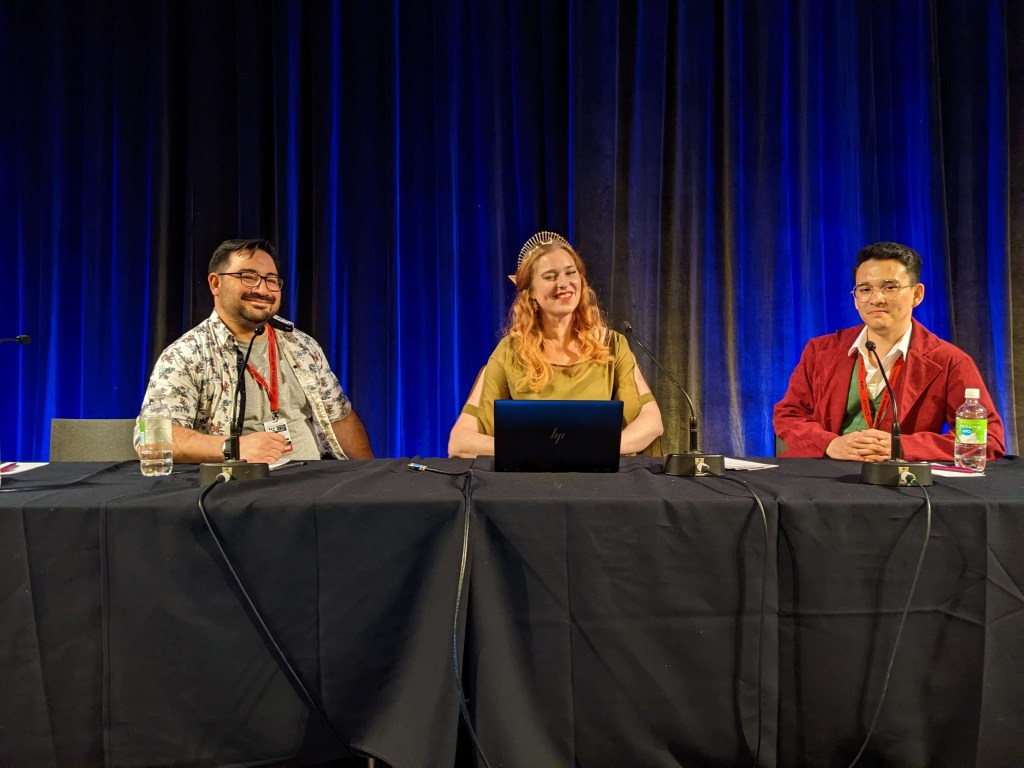
This weekend I was at Pax on a panel called “D&D in the Classroom: A How-To Guide for Educators”. As per our official synopsis:
Anyone who plays D&D can easily list of a myriad of benefits the games gives; social interactions, problem-solving, and creative thinking are just a few. Now imagine if we could bring all those benefits and more to the youngest of adventurers through our classroom teaching? Well, this is exactly what your esteemed panelists have done and now they want to share their knowledge with other educators. Hint number one: Try not to TPK your student’s party in the first session! In this panel we will cover: * How to include D&D in the classroom (Primary years focus) * The benefits of including D&D in your school (emotioinal/social, especially post-Covid) * How to start a D&D club in school * Resources, tips and tricks for introducing younger players to the game
I have included a link to the full audio below, but I wanted to write about my own findings on the emotional and social benefits of playing tabletop games
The past year of playing
For the past year I have been playing a long term Dungeons and Dragons campaign with a group of four neurodiverse teens. They range in age from 13 to 19, and were mostly unfamiliar with how to play any tabletop games. While I would normally play three hour session, we decided to play for two hour sessions to allow for attention spans, but on a weekly schedule. We would meet at a private room at a local community centre, so external noise and distractions were kept to a minimum. As a safety tool I used a standard ding bell initially as a safety device, if the players were uncomfortable in any way they could hit the bell and the scene would move on. As we played more as a group and got to know each other we could dispense with the bell and just talk with each other if necessary.

I chose to play through the setting “Dark of Hot Springs Island“. I chose this setting for three reasons:
1. The setting is focused on the titular island, but still includes a lot of exploration with multiple unique locations. The book also includes rules for how long travel takes, random encounters and a map to give to each player to fill out.
2. There are multiple factions on the island, and players can choose to ally themselves with any of them. This could include the slave-owning but very rich fire elementals, the formerly enslaved and brutal ogres, or the native lizardfolk. It can be difficult to include social interactions in some Dungeons and Dragons campaigns, but having these groups provided and incentive
3. An open ended campaign. Strictly speaking the setting doesn’t have a strict campaign, the players had a goal of getting off the island after they were shipwrecked, but initially no guidelines on how to achieve this. I had hoped that the openness would allow the players freedom to choose, but after a few sessions it was clear they wanted more clear objectives and “railroads” to follow as they explored the island.
During school holidays I would put the campaign on hold while some of the players would go on vacation, and instead run one-shots using different systems. This would mean that the games could continue with no one feeling left out of the main campaign.
Survey process and results.
After a year I decided to survey both the players and their parents about their emotional growth over the time that we played. The Player’s survey was split into three parts:
– Before joining the group: where they were asked about how they felt joining, their knowledge on how to play DnD, and how they felt about meeting new people and new groups in general.
– The Game itself: if they felt sufficiently challenged in the social, exploration and combat aspects of the game, which was not included in the parent survey.
– How they felt now: a measure of how they felt about the group, meeting new people and joining in with others.
The Parent’s survey was effectively the same, but minus questions on the game itself as none of them play. There were two main results I wanted to discuss. The first was the responses to the question:
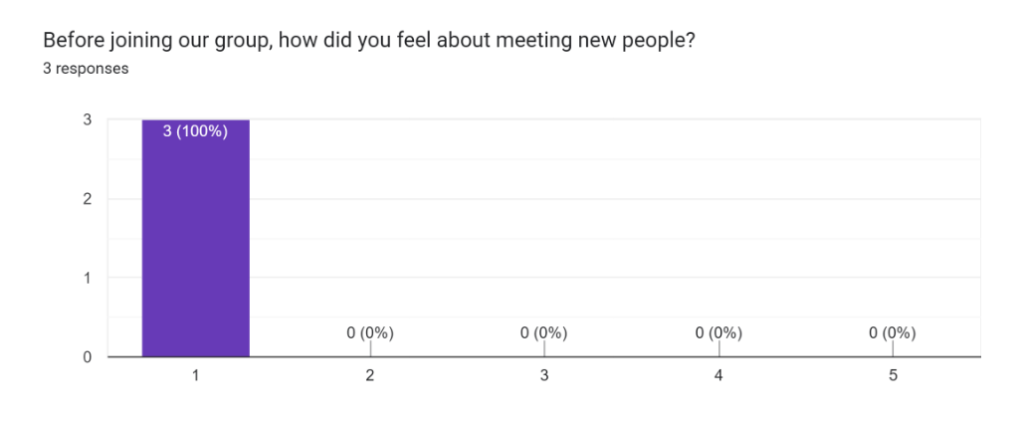
Before joining our group, how did you feel about meeting new people?
Overwhelmingly, the group showed their reluctance with new people, as per the below image.
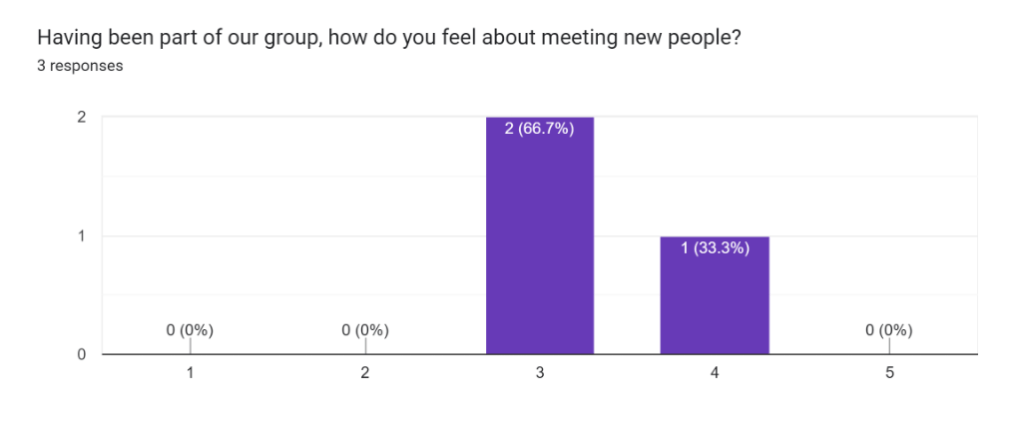
After a year of working together, playing together, and solving puzzles together their responses were the following:
The next question that I wanted to highlight was this:
Before joining our group, how did you feel about being part of a community?
The responses were a bit more spread out this time, however still none were above a 3 out of 5.
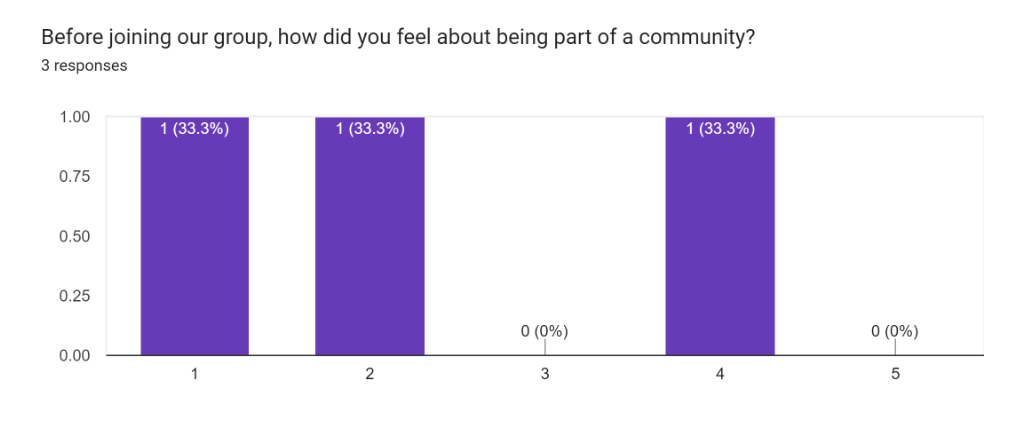
Again, after a year of playing the responses had shifted significantly higher.
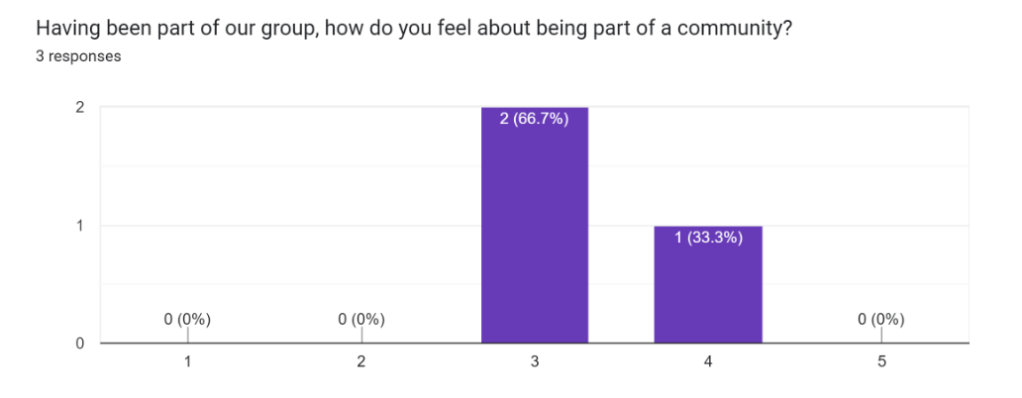
Combined, both of these responses show an increase in willingness to meet new people, both individually and in groups, but so far they have not had much of a chance to act on this new willingness. Over the next year I am hoping that they will be able to get out and about more, but at this point that is beyond my scope.
The final result was this: one of my players responded that our weekly games were the “Highlight of my week”. This same player, even after a year, still needs to be told which dice to roll, and when. We recently changed her character from a battle master fighter (a strategic but complicated martial character) to a champion fighter (a much more basic, but still viable, martial character) as they were not using their class abilities. So if the point of our sessions was to play a game together, and this player was still learning, why would they enjoy these sessions? In my opinion, it’s because the game that we play is the excuse, and not the point, for our sessions. Instead it’s being a part of a group, problem solving as a group, and being able to chat in a safe space together.



 Dan the Game Master